
Retrofit · Site note
Generation meters when you add a battery
Updated
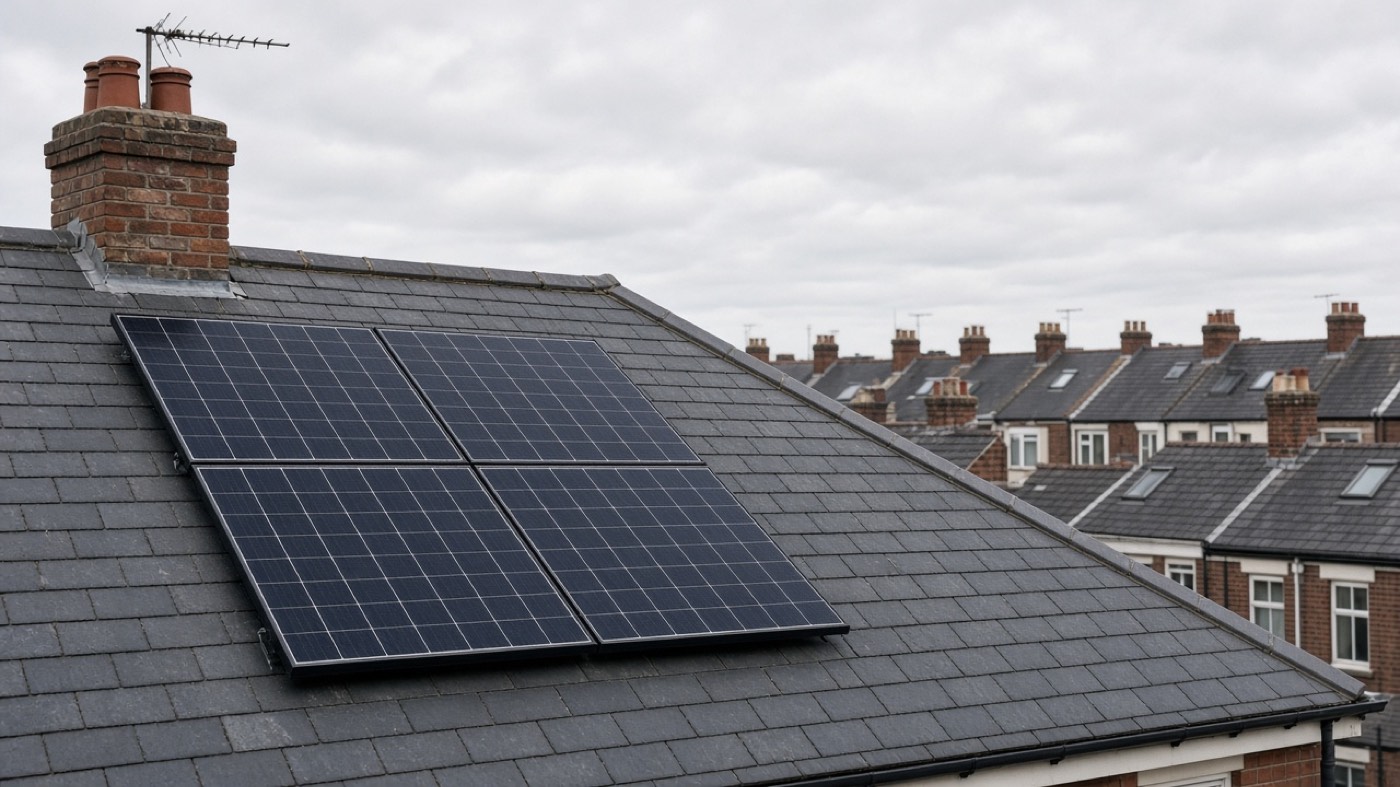
Existing solar may have a generation meter for a Feed-in Tariff or for your own records. Adding a battery must not create a metering muddle about what was generated, stored or exported.
On the actual building
If you are on a legacy Feed-in Tariff, speak to the licensee before anyone reconnects the meter. Do not guess. The cupboard, the supply and the tariff decide it. A national package price skips all three.
In most single-phase houses in Britain, 5 kW sits above the 3.68 kW G98 line, so this wants a G99 application before anyone energises it. Export can still be capped. Agree that before the inverter is ordered. The figure uses 13.5 kWh and 4 kWp, which is enough to tell two quotes apart if they assumed something else.
The money
Take a 13.5 kWh pack, cycled about 260 times, at 90% round trip. Charge at 13.0p, and value what comes back at 26.0p. Export given up is priced at 4.0p. About 2006 kWh a year of the charge is treated as spare solar from 4 kWp that might otherwise have been exported. Delivered energy is about 3159 kWh. After charging cost and lost export, the figure saves about £562 a year. Set that against £7,965 fitted, which is a September 2026 illustration at the temporary 0% residential rate, not a quote. That is a simple payback of about 14.2 years on these assumptions. Nudge the night rate up by 4p and see if you still like it.
Where the job is a qualifying install in a home, the 0% rate runs to 31 March 2027 and is due to become 5% after that. This figure prices the work at £7,965 on that basis. It does not apply to a shop, and it does not apply to a battery you buy and fit yourself.
When to stop
I would not compare a £7,965 headline with another until usable kWh and the fate of any existing inverter match.
If the only place for a 13.5 kWh cabinet is an escape route, a hot boiler cupboard or an unapproved balcony, stopping is a successful survey.
Before a deposit, I would want usable capacity, the warranty counterparty and a G99 note for this 5 kW inverter. The cupboard has to be a place you can stand in, at a temperature the datasheet allows. A five-minute video is not that.
Common questions
Is the price on this page a quote?
No. £7,965 is a September 2026 illustration for a 13.5 kWh example at the temporary 0% residential rate. Your survey replaces it.
Will it stay on in a power cut?
Only if a gateway or essential-load board was designed and paid for. A standard grid-tied battery turns off with the grid. On this 13.5 kWh example the inverter is 5 kW, and backup is still a separate line.
What paperwork should I keep?
Keep the MCS certificate where the job is certified, the electrical certificate, the DNO record, the schematic, the warranty registration and a photo of the schedule. For an illustrated £7,965 job, that folder is part of what you bought.
What if the cheap rate is not 7p?
Then the figure changes. This page used 13.0p as a charge rate and 26.0p as the rate avoided. A smaller gap means a worse payback. Read the live tariff.
Sources
Want a price for your house?
The figures above are a rough guide. An installer still needs to see your fuse board, where the battery will go, and whether you want power during a blackout.